Since 2008, Grow Some Good has brought hands-on garden learning into schools across Maui — reaching over 8,000 students a year through our Farm to School Program.
From One Garden Bed to a County Wide Network.
What started as a single garden bed at Kīhei Elementary has grown into a network of school gardens now reaching more than 8,000 students a year, roughly 70% of them from low-income households, and many attending Title 1 schools where outdoor, agricultural learning would otherwise be out of reach.
Our Farm to School Program places trained Garden Coordinators in schools to deliver curriculum-aligned lessons that blend STEM, nutrition, cultural knowledge, and environmental stewardship. Kids don’t just read about where food comes from — they dig in the soil, plant seeds, tend crops, and harvest what they grow, building a direct relationship with their food and their ʻāina.
This work doesn’t happen in isolation. We partner with the Maui Family YMCA, Maui Nui Botanical Gardens, and the Hawaiʻi Department of Education, and are named a primary Action Lead in the County of Maui’s Food and Nutrition Security Plan 2025–2030 with recognition that our school garden work is central to the County’s own food security goals.
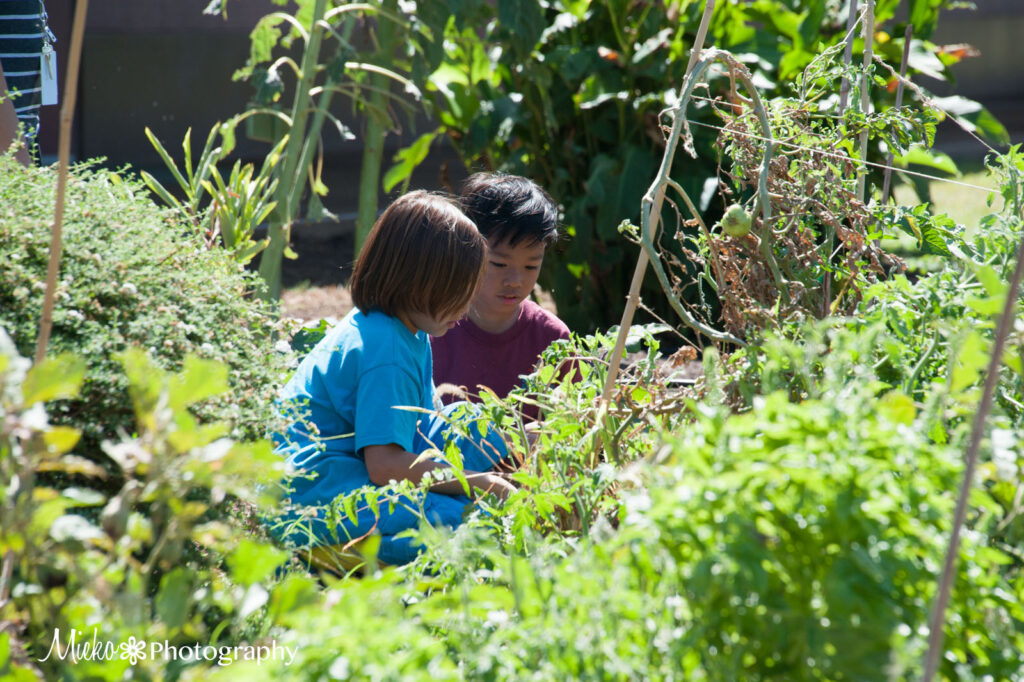
“The garden has been such a positive and enriching part of our school experience offering students a chance to connect with nature, learn about where their food comes from, and engage in hands-on science and environmental education. The garden coordinator has been a fantastic resource, creating a welcoming, inclusive space for all students and bringing a lot of enthusiasm and knowledge to each session. “
– Aljhon Tamondong, 3rd Grade Teacher at Wailuku Elementary
How It Works
Support looks different based on the needs of each school and their keiki.
Receive hands-on staffing through Grow Some Good, regular garden workdays, and materials through service agreements renewed each year, ensuring students get a consistent, high-quality garden experience.
Are helped to hire and train their own qualified garden teachers, and continue to receive access to our curriculum, network resources, and professional development.
Smaller programs, often run by a teacher or two, receive resources, guidance, and support to help grow or restart their garden.
Why It Matters
The results show up in how keiki see their food and interact with the ‘āina.
Maui County faces real, ongoing challenges: persistent food insecurity, a shrinking agricultural workforce, and limited access to culturally grounded nutrition education for youth. Nearly half of Hawaiʻi families with children experience food insecurity, with Native Hawaiian and Pacific Islander families facing even higher rates.
Research also shows that youth who engage in agricultural education reduce their risk of Type II diabetes, (Maʻo Organic Farms. Mauli Ola Study) — a health outcome with ripple effects for families and the broader healthcare system. Farm to School meets this moment by giving keiki early, repeated, joyful exposure to growing and trying healthy foods.
From our 2025–2026 School Garden Survey of 66 teachers and 41 ʻohana across six elementary schools: